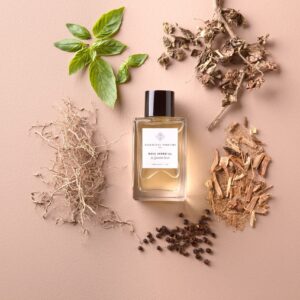
The perfume industry in 2026 is a multi-billion dollar machine that blends ancient artisanal traditions with high stakes chemical engineering and data science. Behind every bottle on a shelf is a complex journey involving “The Big Five” fragrance houses, master perfumers, and high tech extraction labs.
1. The Power Players: Fragrance Houses
Most people believe fashion brands (like Chanel or Dior) make their own perfumes in house. In reality, the vast majority of scents are developed by massive, behind the scenes fragrance houses.
- The “Big Five”: Companies like Givaudan, Firmenich, IFF (International Flavors & Fragrances), Symrise, and Mane hold the patents to the most popular molecules and employ the world’s top perfumers.
- The Brief: A brand (e.g Gucci) sends a “brief” to these houses describing an emotion or a target customer. The houses then compete against each other to win the contract by presenting different scent trials.
2. The “Nose” (The Master Perfumer)
At the heart of the industry is the Perfumer. Becoming a “Nose” requires years of training to identify thousands of raw materials blindly.
- The Palette: A modern perfumer works with a palette of roughly 3,000 synthetic molecules and several hundred natural extracts.
- AI Collaboration: In 2026, many perfumers use AI tools (like Givaudan’s Carto) to suggest proportions or predict how a specific combination will react over time, speeding up the trial process.
3. The Science of Extraction
How do we get the smell of a rose or a piece of wood into a bottle? In 2026, the methods range from ancient to futuristic.
- Steam Distillation: The oldest method, using heat and pressure to pull essential oils from plants.
- CO2 Extraction: A high tech, eco friendly method that uses pressurized carbon dioxide to “capture” scent without heat, preserving the most delicate and realistic notes.
- Headspace Technology: Scientists place a glass dome over a living flower or object (like a rare tropical orchid or even a specific forest floor) to “vacuum” the air around it. They then analyze the gas to recreate the exact smell in a lab without picking the flower.
4. The Manufacturing Process
Once a formula is finalized, it moves to the factory:
- Blending: Pure fragrance oils are mixed according to the secret formula.
- Maceration: The oils are mixed with high grade alcohol and “aged” in large stainless steel vats for weeks. This allows the molecules to bond and the scent to stabilize.
- Chilling & Filtering: The mixture is chilled to near freezing temperatures to force any impurities to clump together, then filtered out to ensure the liquid remains crystal clear.